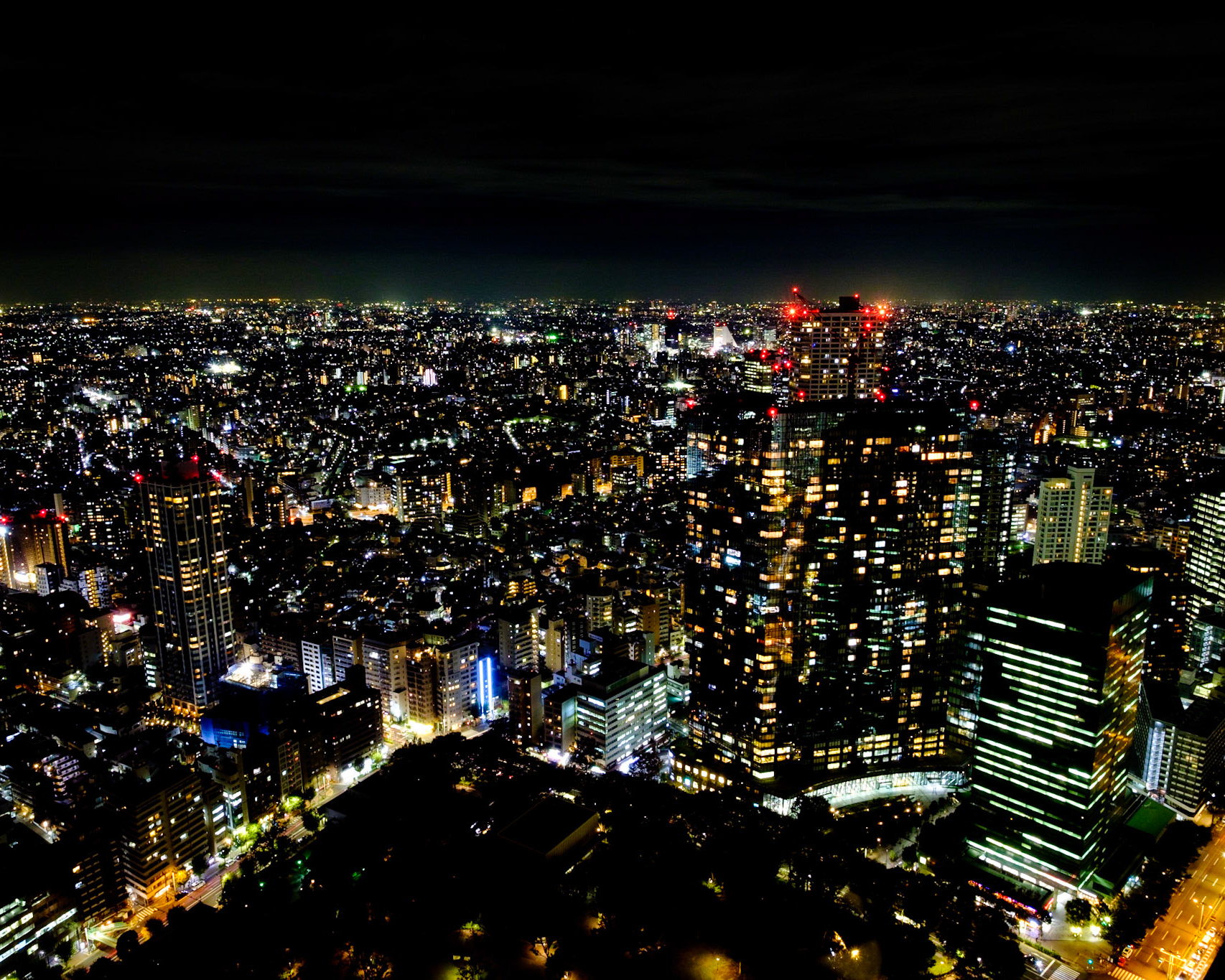
We left Tokyo on a Romancecar train—one of those trains that sounds a bit too fancy to be just transportation. From Shinjuku, we rolled south toward Hakone. Through the window, we watched the city slowly dissolve into mountains, rivers, and something like rain glitter in the air. It felt like breathing out for the first time after several intense days in Tokyo.

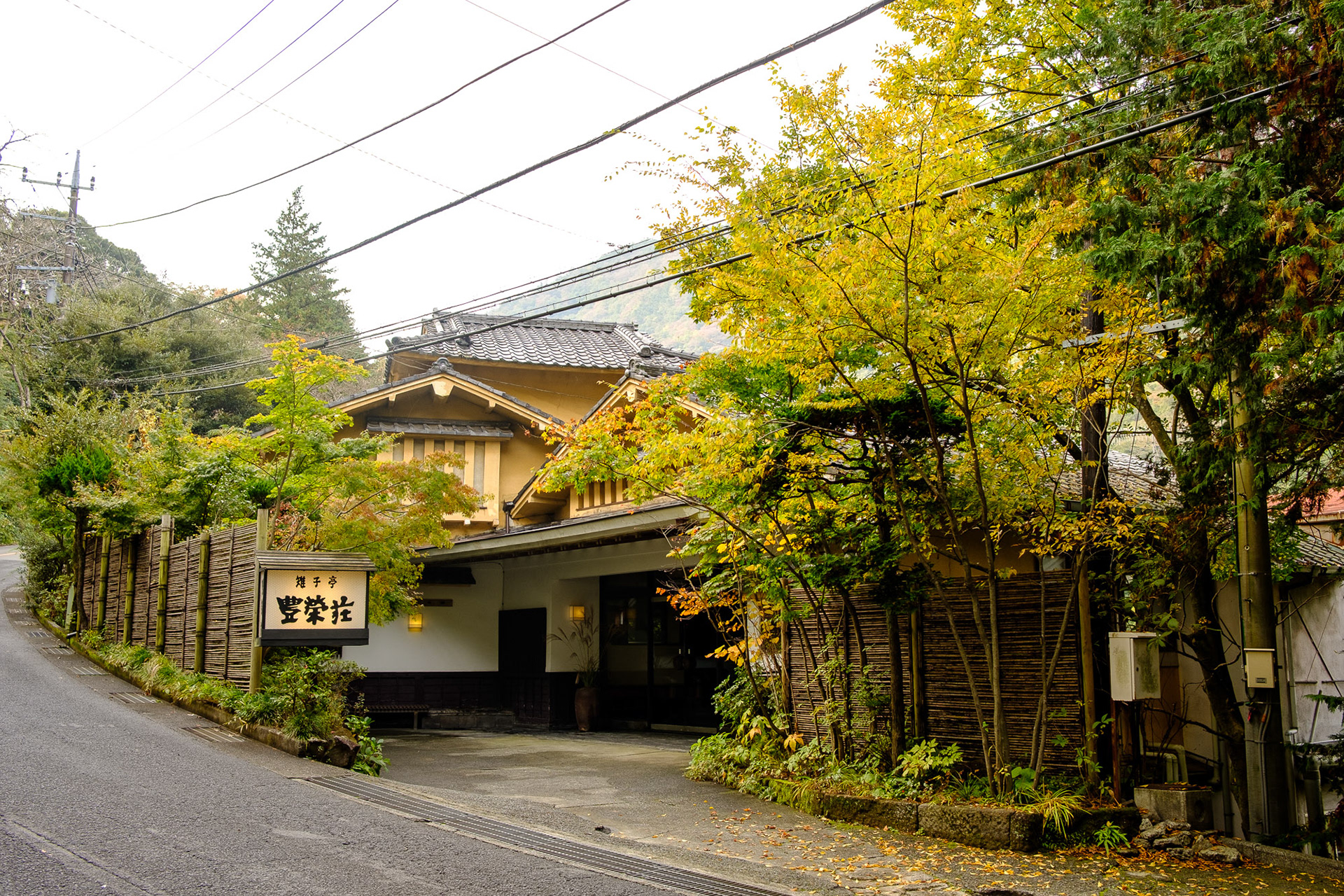
At Hakone-Yumoto we switched to a bus and drove up to our ryokan, a traditional Japanese guesthouse nestled in the forest
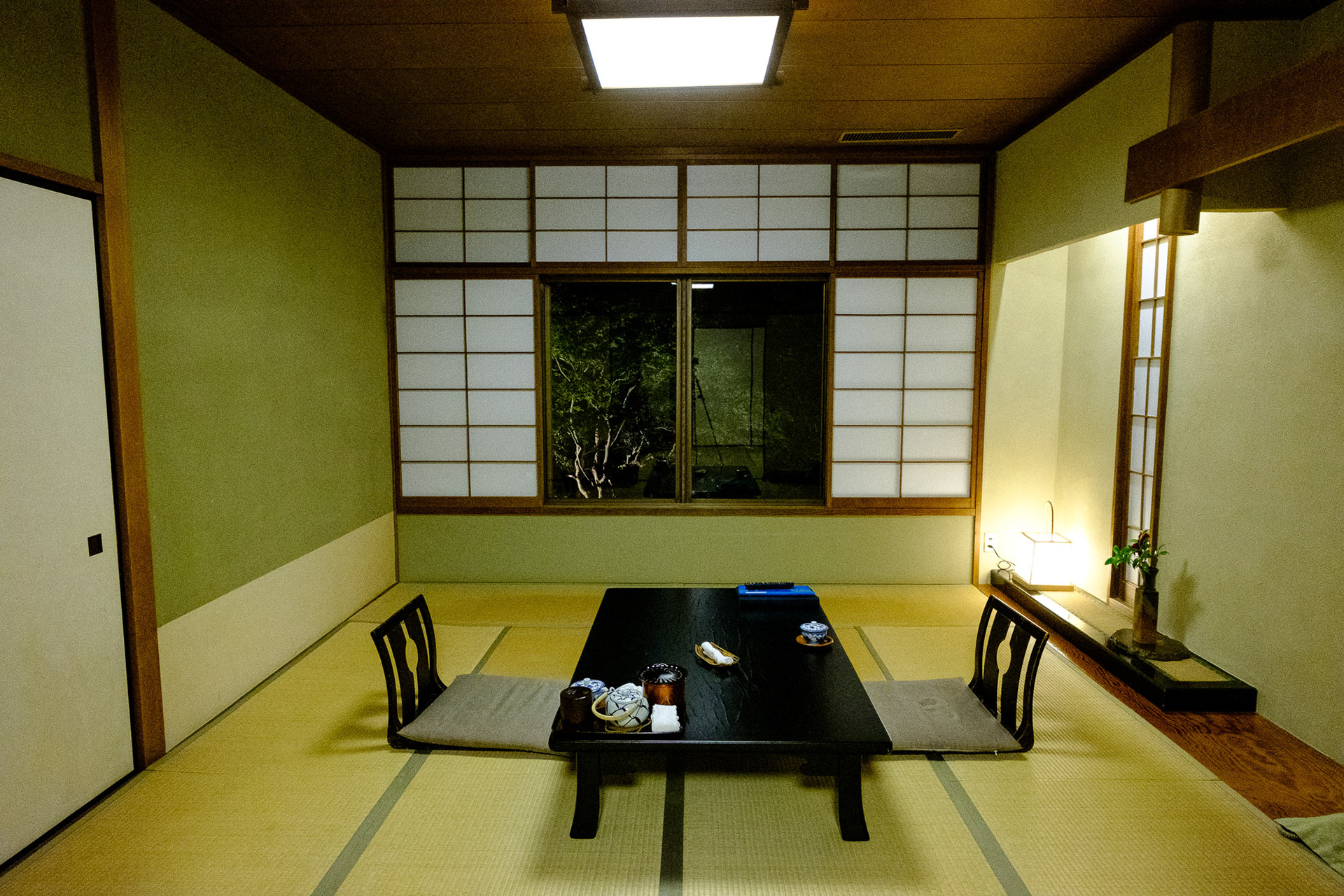
When we arrived, we were instructed to take off our shoes in the entrance—as you do at all ryokan—and were warmly welcomed by the staff. We were assigned our own nakai, a dedicated attendant who would care for us throughout our stay. She set out breakfast and dinner in our combined living and dining room, made our futons (Japanese floor beds) in the evening, and then disappeared as quietly as she had come. There was something almost unreal about how seamlessly everything worked.
After setting down our bags and exploring the ryokan, we discovered the outdoor onsen—a hot bath fed by water from the nearby springs. You could go there anytime, even in the middle of the night if you wanted. But right then, we wanted to get out and look around.
Traditional Japanese ryokan entrance with tatami room and kimono in Hakone

Our ryokan, where shoes stayed at the door and time seemed to slow down.

Moto-Hakone and the Peace Torii
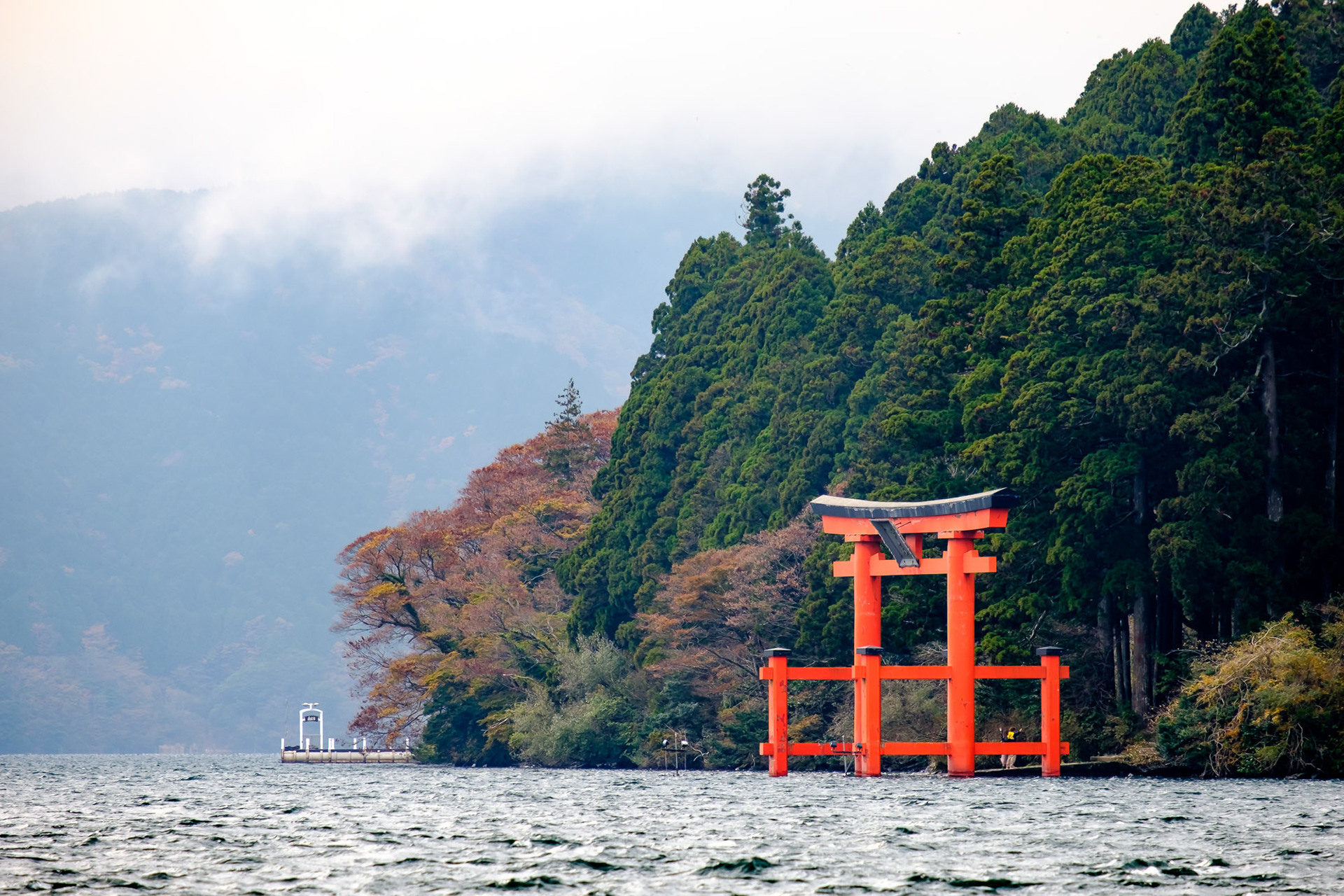
Red torii gate rising from Lake Ashi with misty mountains in Hakone

The Peace Torii rising from Lake Ashi—my first glimpse of Hakone beyond Tokyo's pulse.
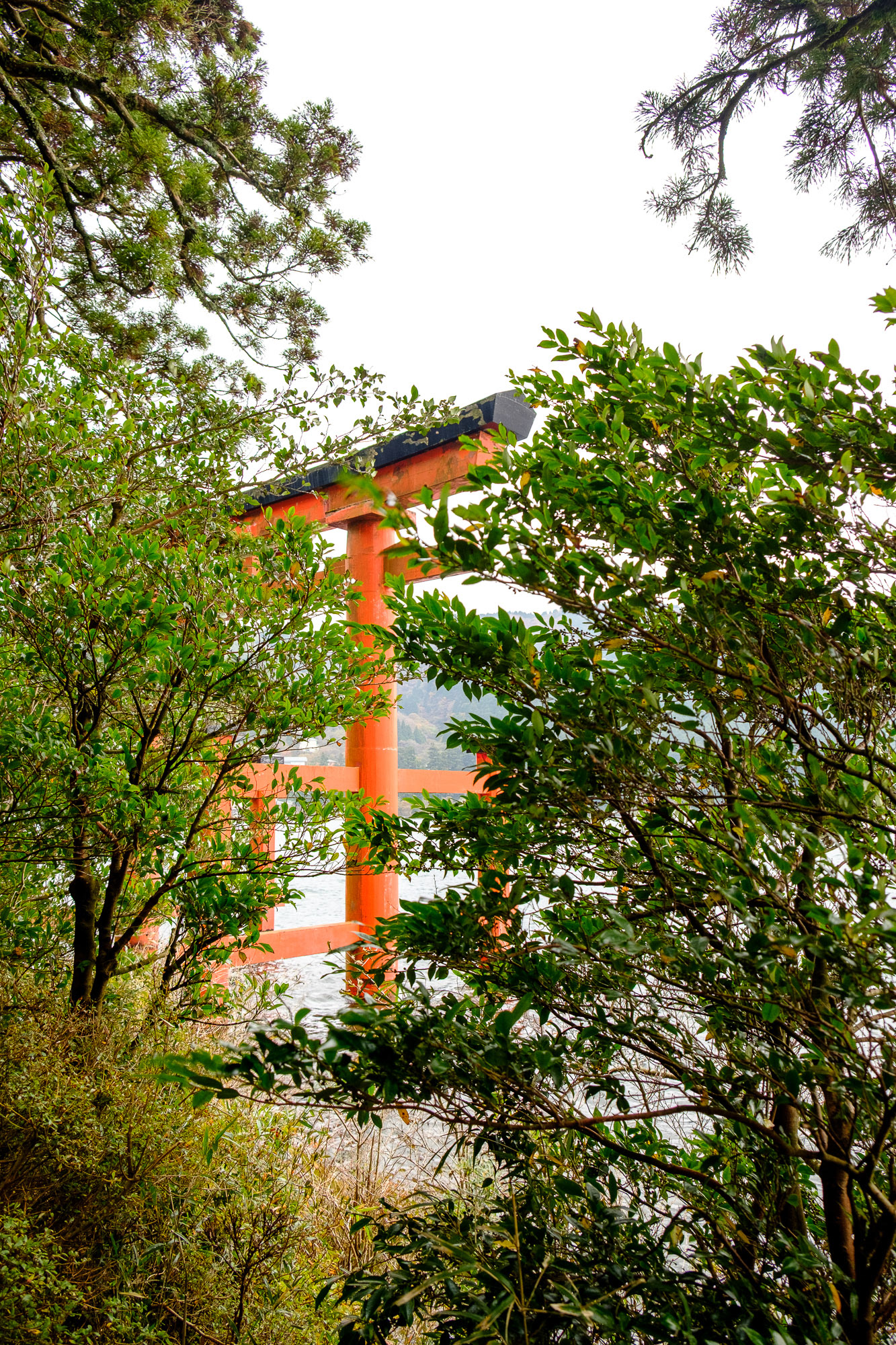
We took the bus to Moto-Hakone to have lunch and get familiar with the area. There, on the other side of the lake, rose the large red torii gate—the Peace Torii, Heiwa no Torii—rising straight out of the water. I photographed it from a distance first, trying to capture how it stood out against the mountains behind. It was cool and windy, and the air felt humid in a way Tokyo never did.
For the first time since we landed in Japan, it felt like we had truly left the city's pulse. Even though Hakone is only an hour from Tokyo, it was like stepping into another world—quieter, slower, with a faint scent of sulfur from Owakudani lingering in the wind.
We walked down to the torii gate to see it up close. You could walk out into the water and stand under it, and many did—the line of people wanting that exact shot was long. We stood there for a while and watched, but skipped it. Partly because we had a time to catch for dinner, partly because I already knew I had gotten the image I wanted from a distance.
Tourists at the Peace Torii gate Heiwa no Torii on Lake Ashi Hakone

Dinner at the Ryokan
At 6 PM our nakai came and began setting out dinner.
Kaiseki. A traditional Japanese dining ritual where each dish arrives in its own time, on its own plate, arranged as if someone truly cares about the details. It's slow. Elegant. And it quietly tells you that you're not home anymore.
Our meal consisted of:
• small appetizers in individual bowls
• sashimi
• pickled vegetables
• a shabu-shabu hot pot we cooked ourselves at the table
• small tastings arranged more beautifully than food needs to be
Kaiseki unfolding dish by dish on tatami, each plate more carefully arranged than the las
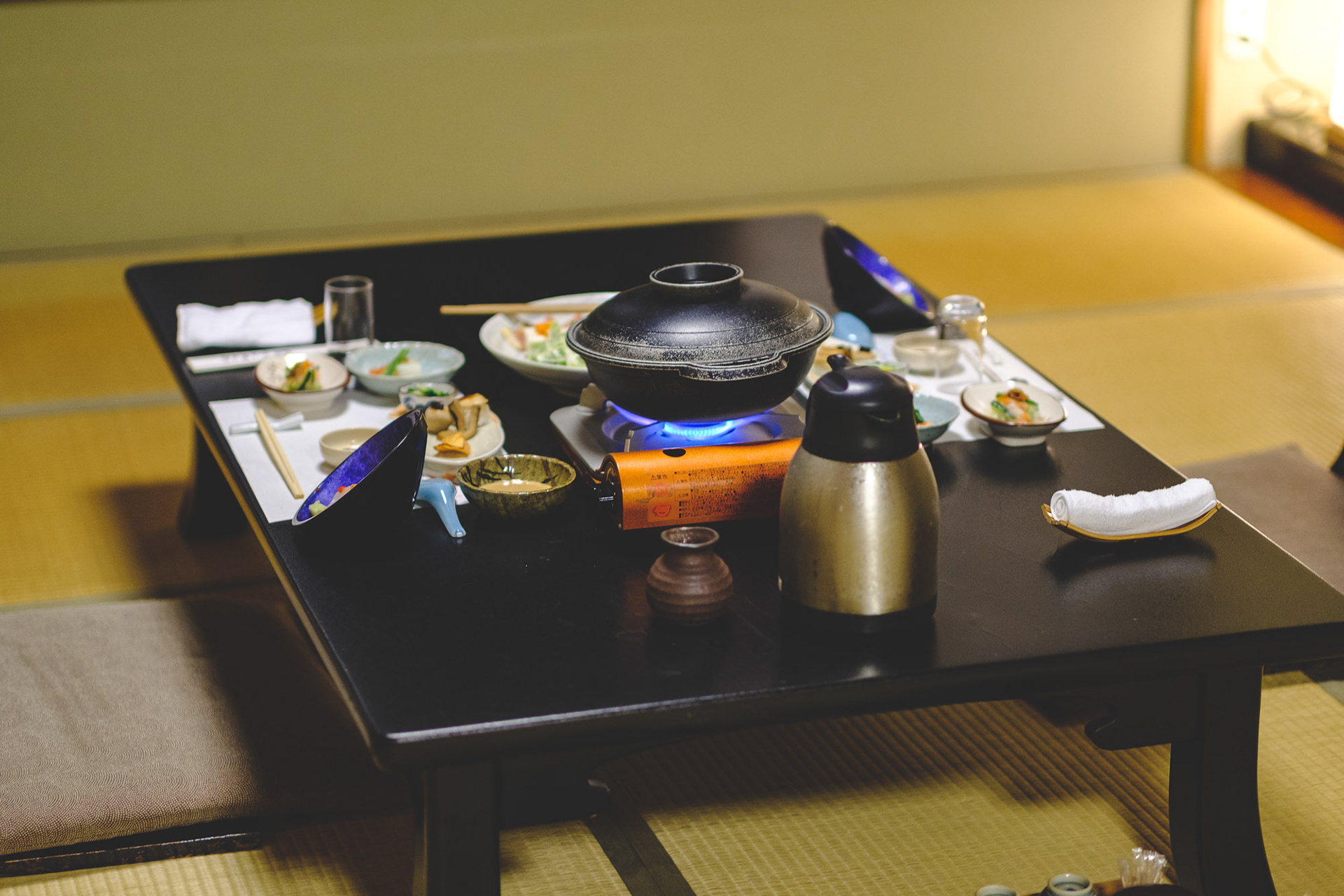
Kaiseki, served in quiet sequence at a low table on tatami, each dish arriving as if someone truly cared about the details.
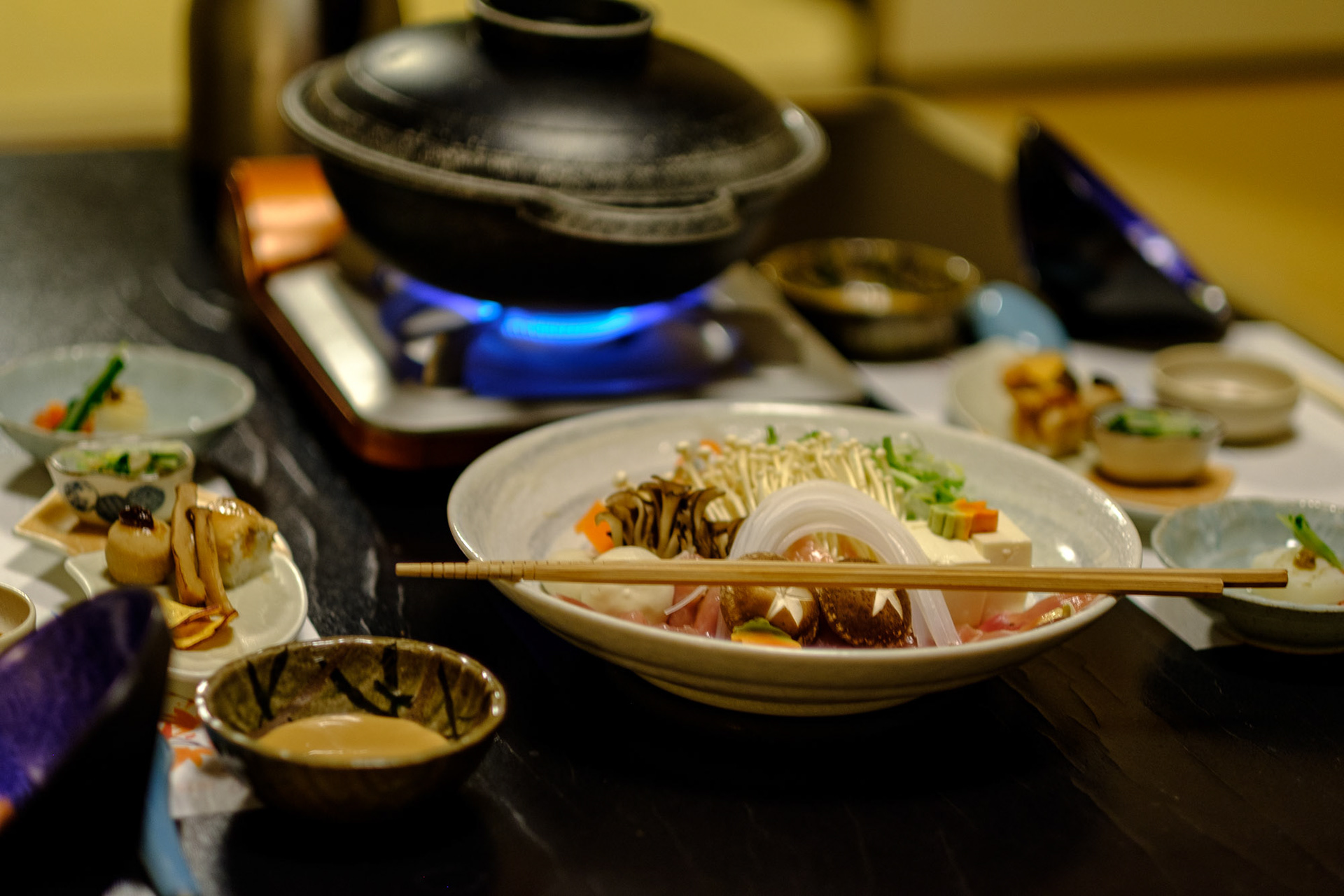
Ingredients for our shabu-shabu simmering ritual, surrounded by small kaiseki dishes waiting their turn.
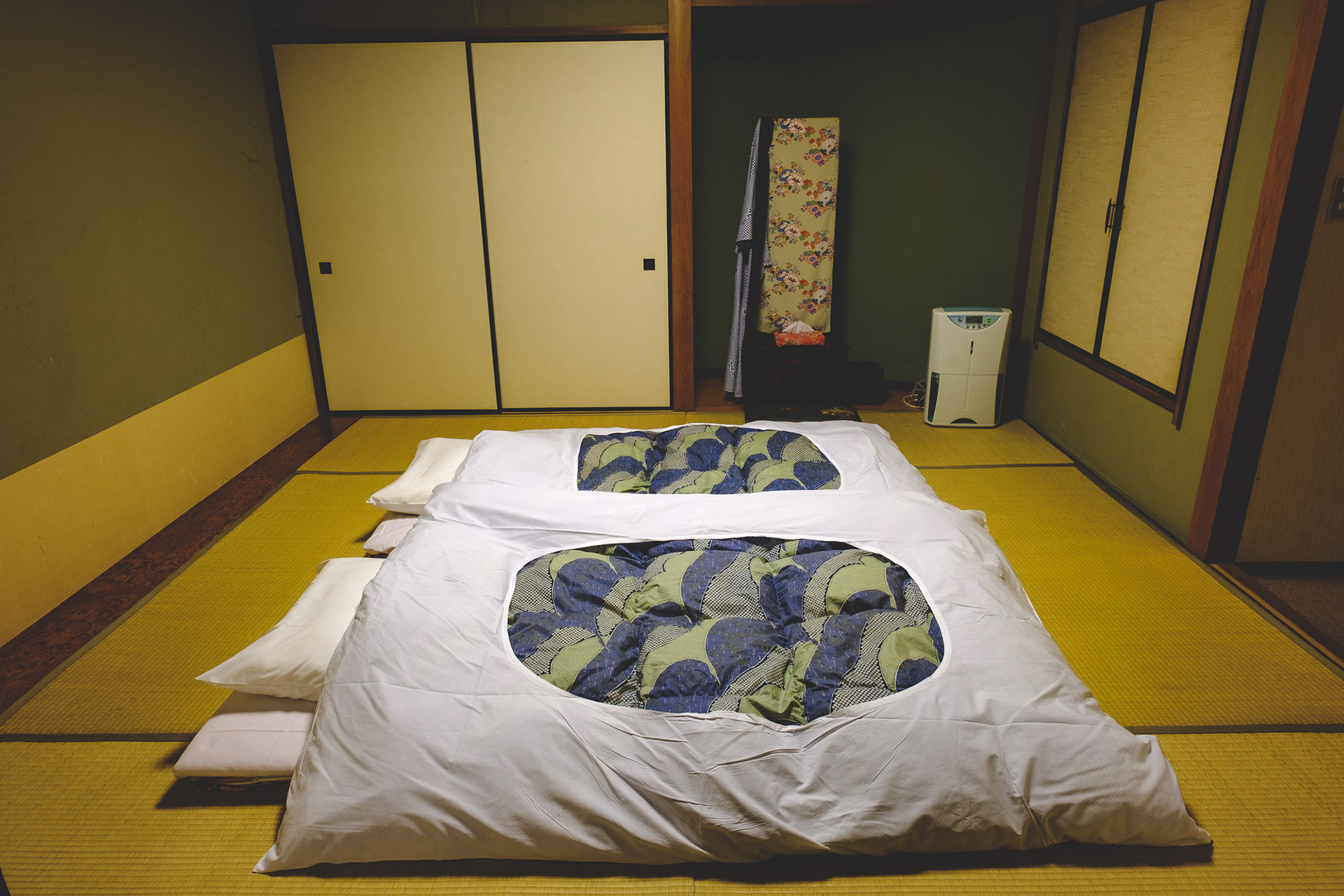
Afterward, our nakai came back and prepared our bedroom. Futons directly on tatami mats [DSCF6337]. No beds, no frames. Just soft mattresses and silence.
It was a quiet ending to a day that had begun in Tokyo's intense rhythm and ended here—in Hakone's forests, mist, and sulfur scent.
Two futons laid directly on tatami mats in a traditional Japanese ryokan bedroom, prepared for the night.

Futons on tatami, prepared quietly for the night as the day settled into silence.
Hakone Loop
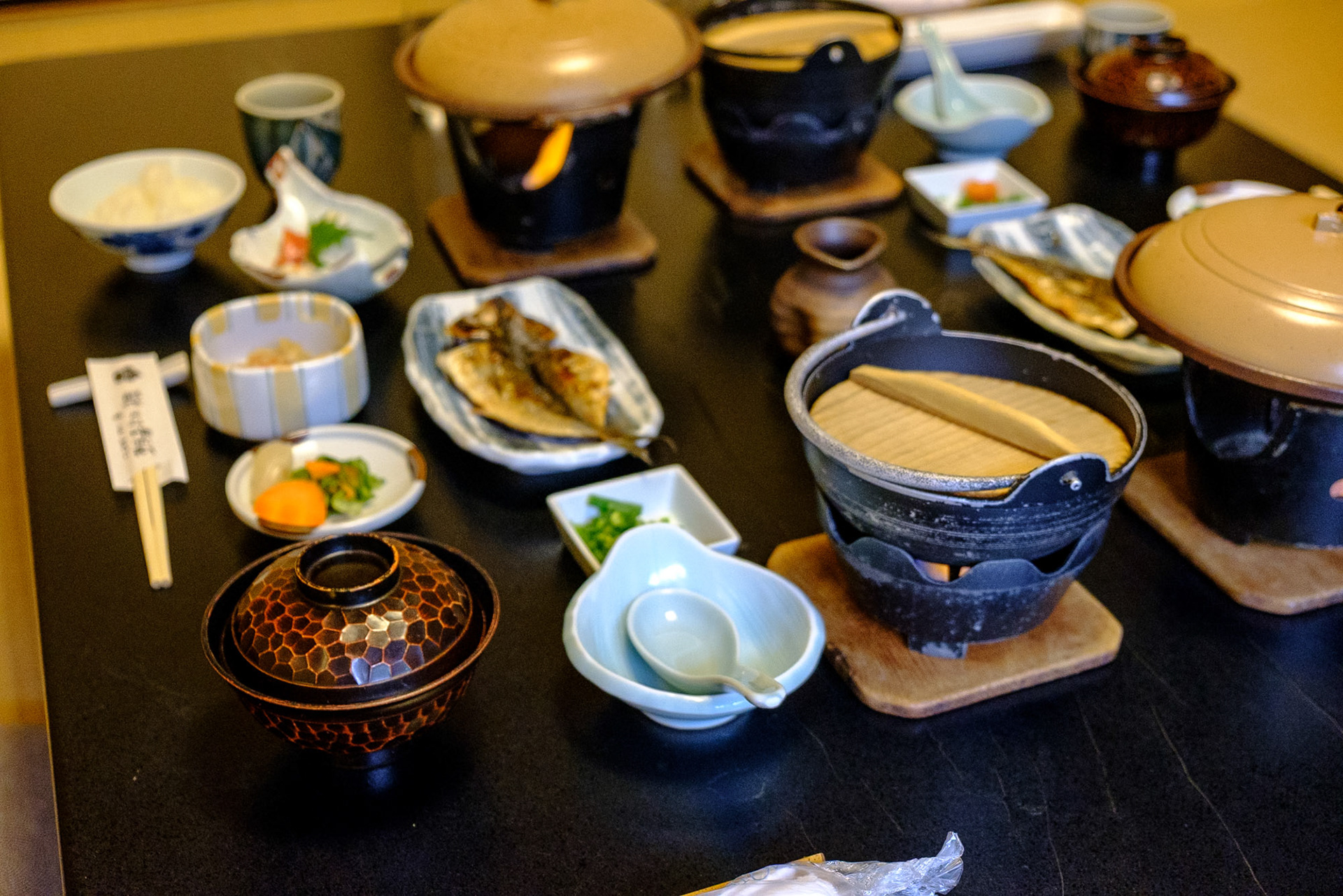
The next day started early with breakfast that our nakai set out. Wachoshoku—traditional Japanese breakfast. Fish, rice, miso soup, pickles. Not everything was to our taste, but it was an experience in itself.
A traditional Japanese breakfast with small dishes, grilled fish, rice, miso soup and hot pots arranged on a low table in a ryokan.

Wachoshoku for breakfast: small dishes, rice and fish served quietly on tatami before the day began.
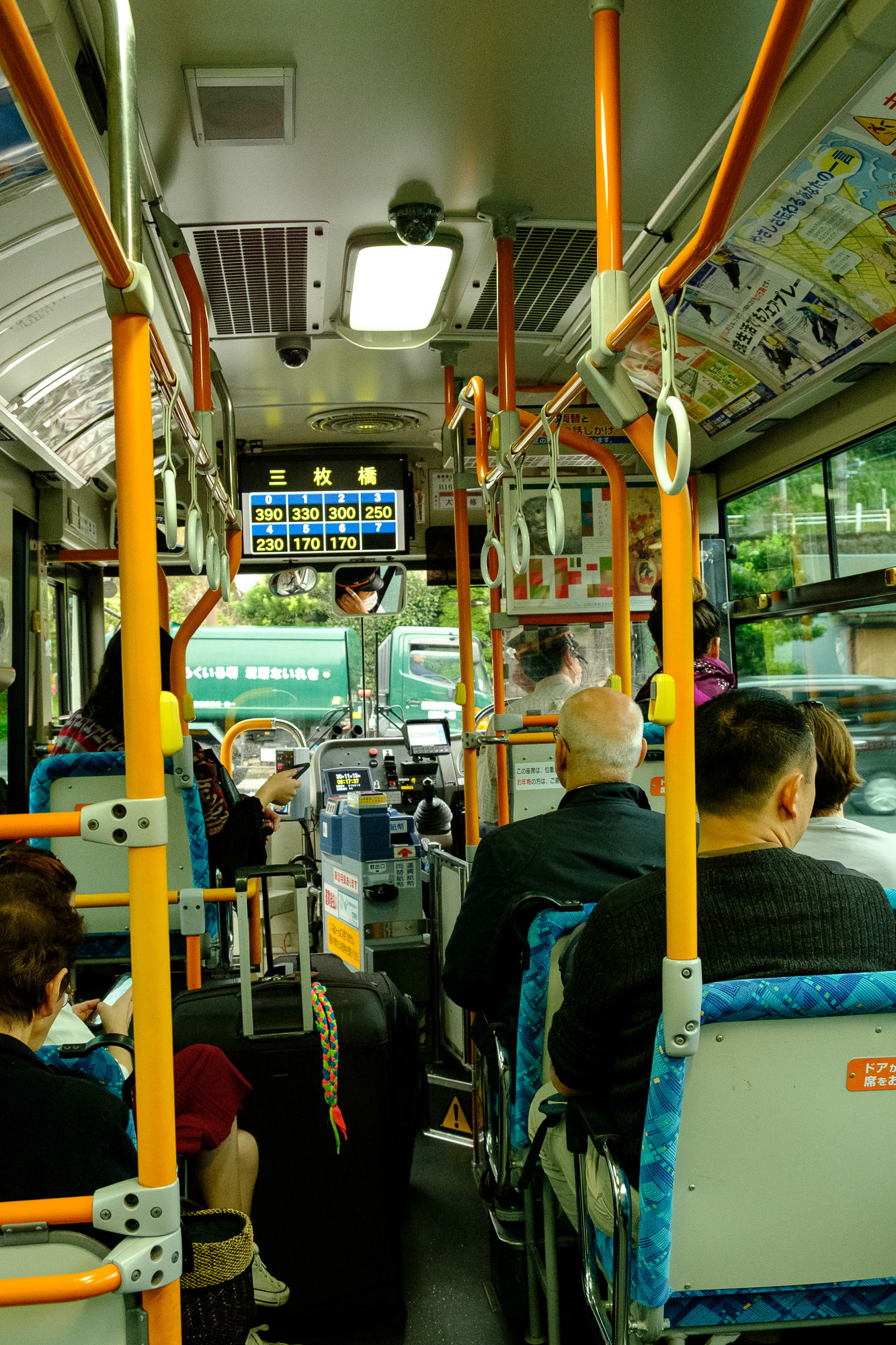
Then we took the bus back down to Hakone-Yumoto and followed the Hayakawa River. for a bit before we found the entrance to the Hakone Tozan Railway.
Interior of local bus in Hakone Japan with colorful seats

The local bus back to Hakone-Yumoto, colorful, efficient, and charming.
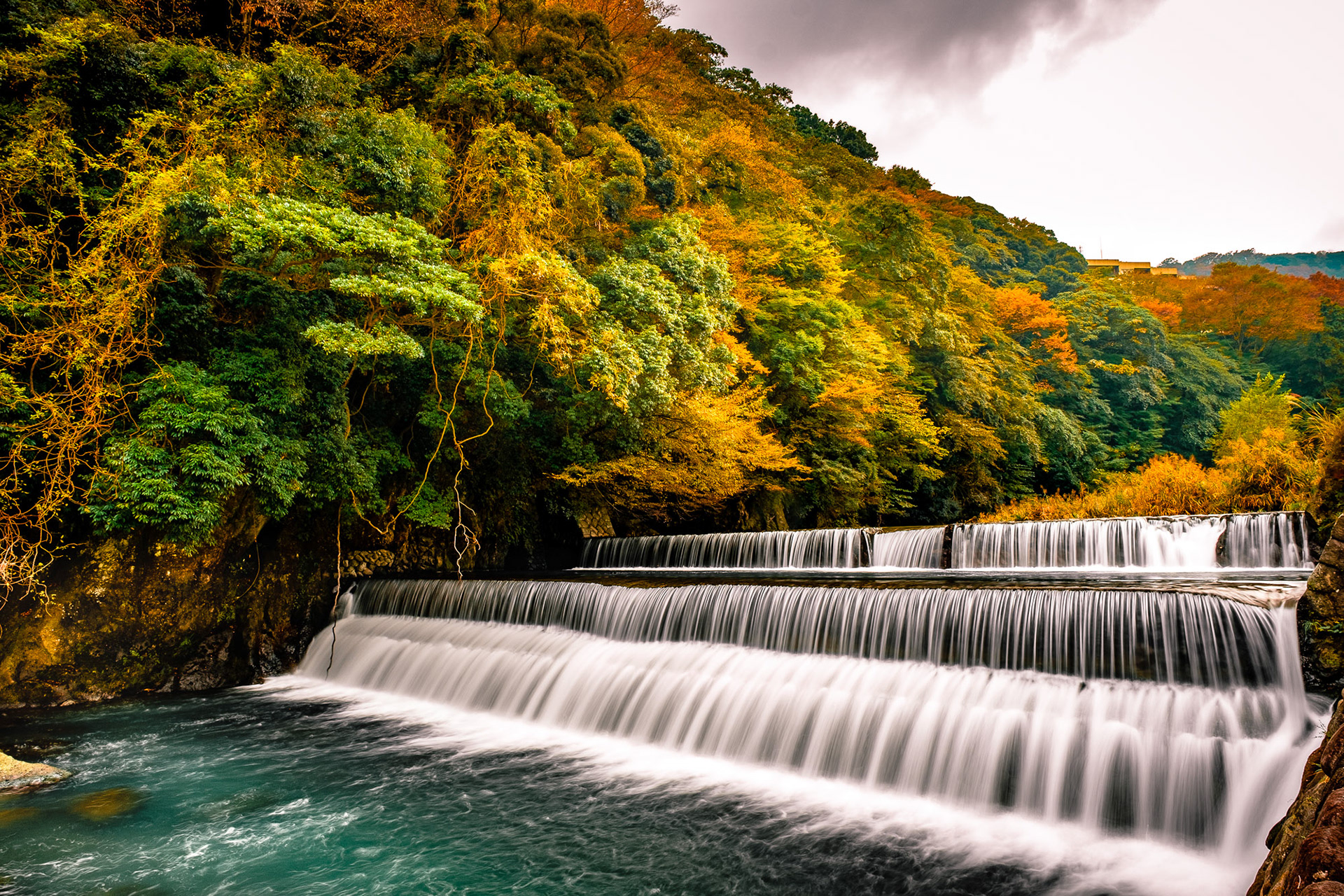
Hayakawa River with autumn foliage and bridge in Hakone

Following the Hayakawa River through autumn—a moment of stillness before the Hakone Loop began.
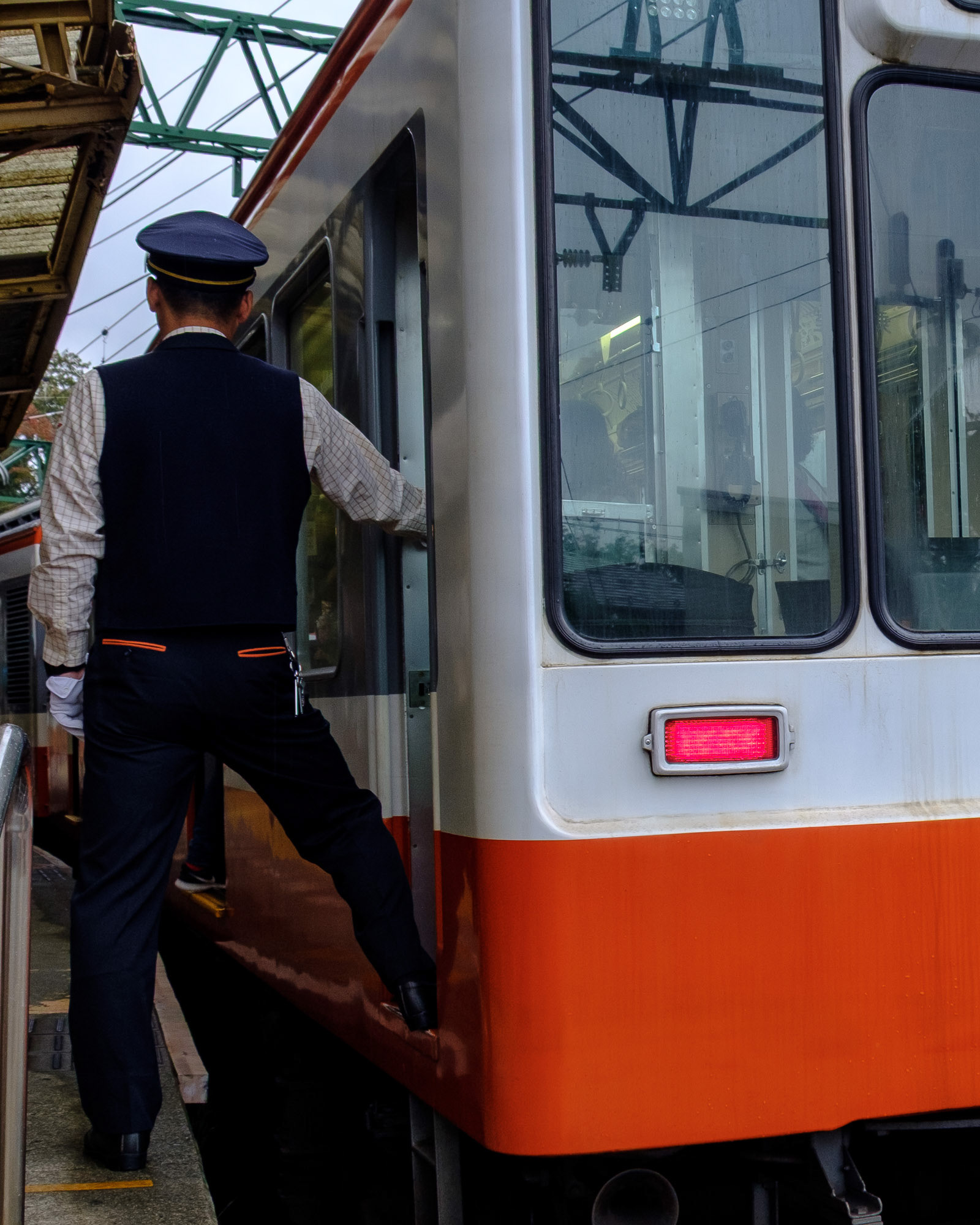
A Hakone Tozan Railway conductor stepping onto the train, holding the door frame as the carriage prepares to depart.

A conductor stepping onto the Hakone Tozan Railway, just before the slow climb into mist and forest.
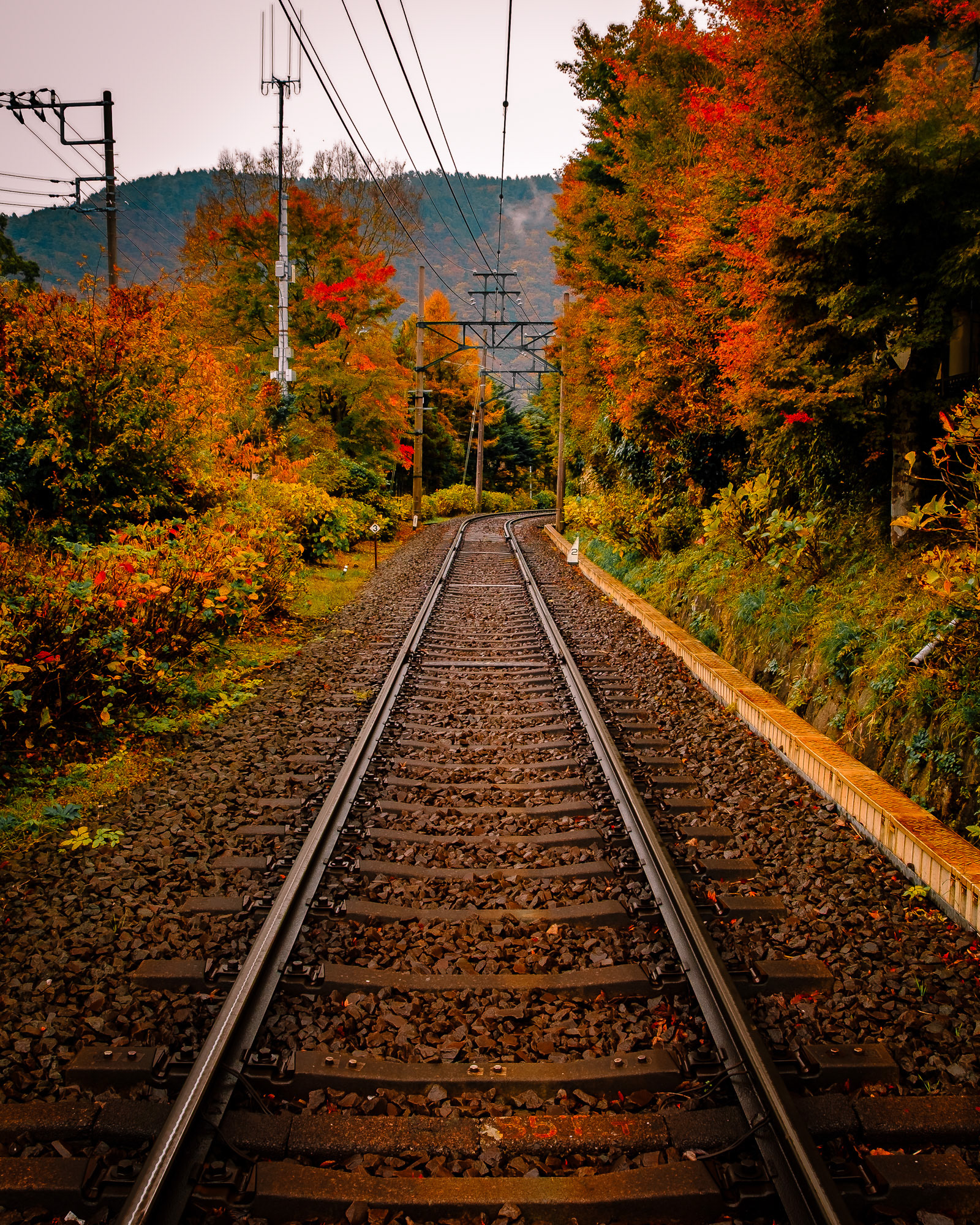
The Hakone Tozan Railway  is no ordinary commuter train. It climbs slowly—very slowly—from Hakone-Yumoto up to Gora through forest and mist. On certain stretches, the incline is so steep that the train uses a zigzag system: it goes forward as far as it can, stops, switches direction, and backs up the mountain instead. It's more of an experience than a means of transport. It would have been almost faster to walk. 
View from Hakone Tozan Railway through autumn forest

Climbing slowly through mist and autumn forest—it would have been almost faster to walk.

Chisuji Falls
At Kowakidani station, we got off. Not because it was in any Hakone guide, but because I had found pictures of a small waterfall, Chisuji Falls, online and wanted to see if it really was as obscure and cool as it looked. 
It was.
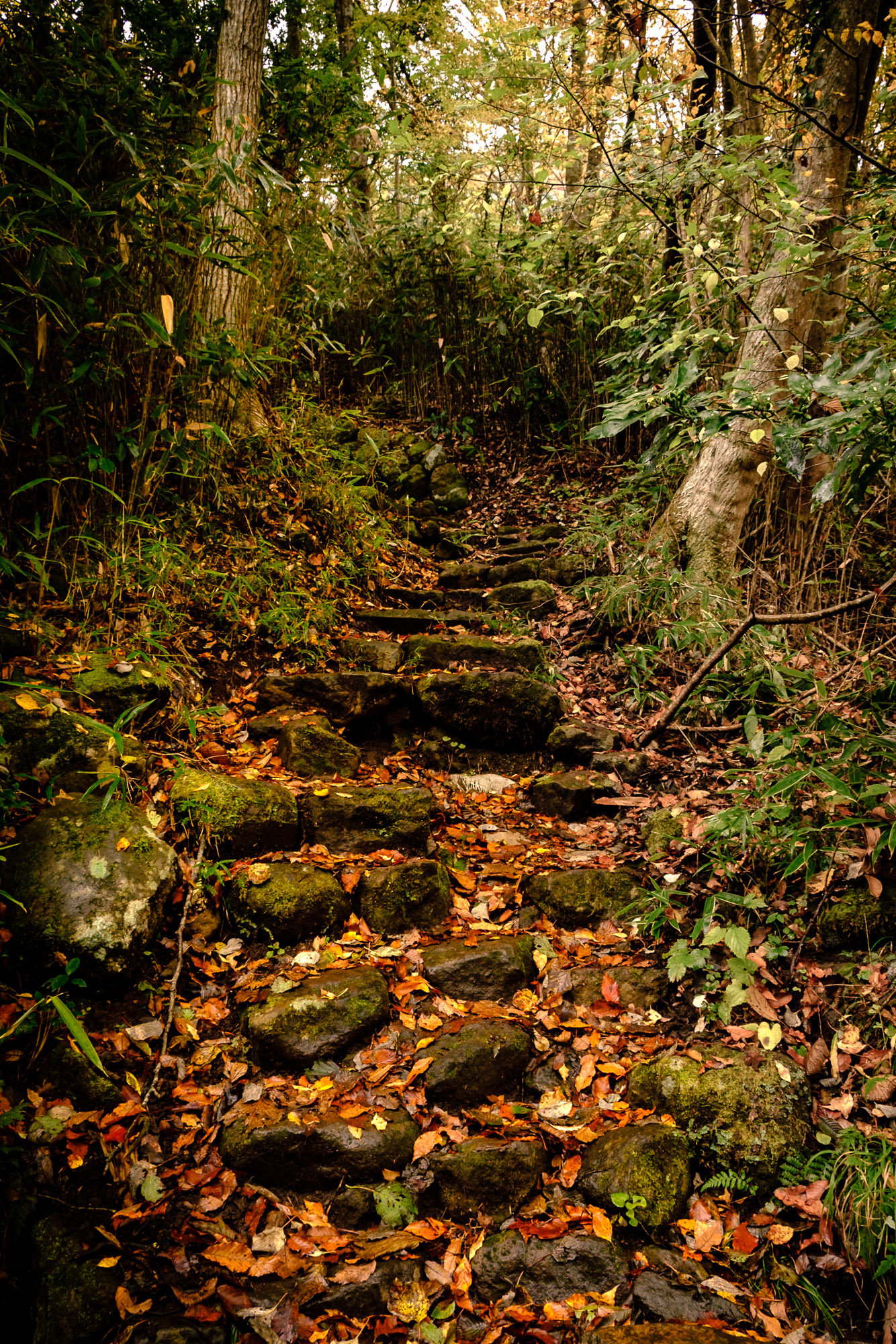
The sign was there, but barely visible. The stairs down —narrow, damp, overgrown—didn't look particularly inviting. But once we reached the bottom of the valley, something entirely different opened up. The waterfall was small, tucked into the ravine like a secret, but that wasn't the point. The point was the silence. The humidity. The green light filtered through the leaves. That we were completely alone down there while the tour buses rolled somewhere else.
I took out my camera and realized this was the kind of place that doesn't let itself be captured straight on. The water was too slow, the stones too mossy, the light too soft. But that was also exactly what made me want to try.
Narrow, mossy stairs descending into a forest ravine on the way to Chisuji Falls in Hakone.

The steep, overgrown stairs leading down toward Chisuji Falls.
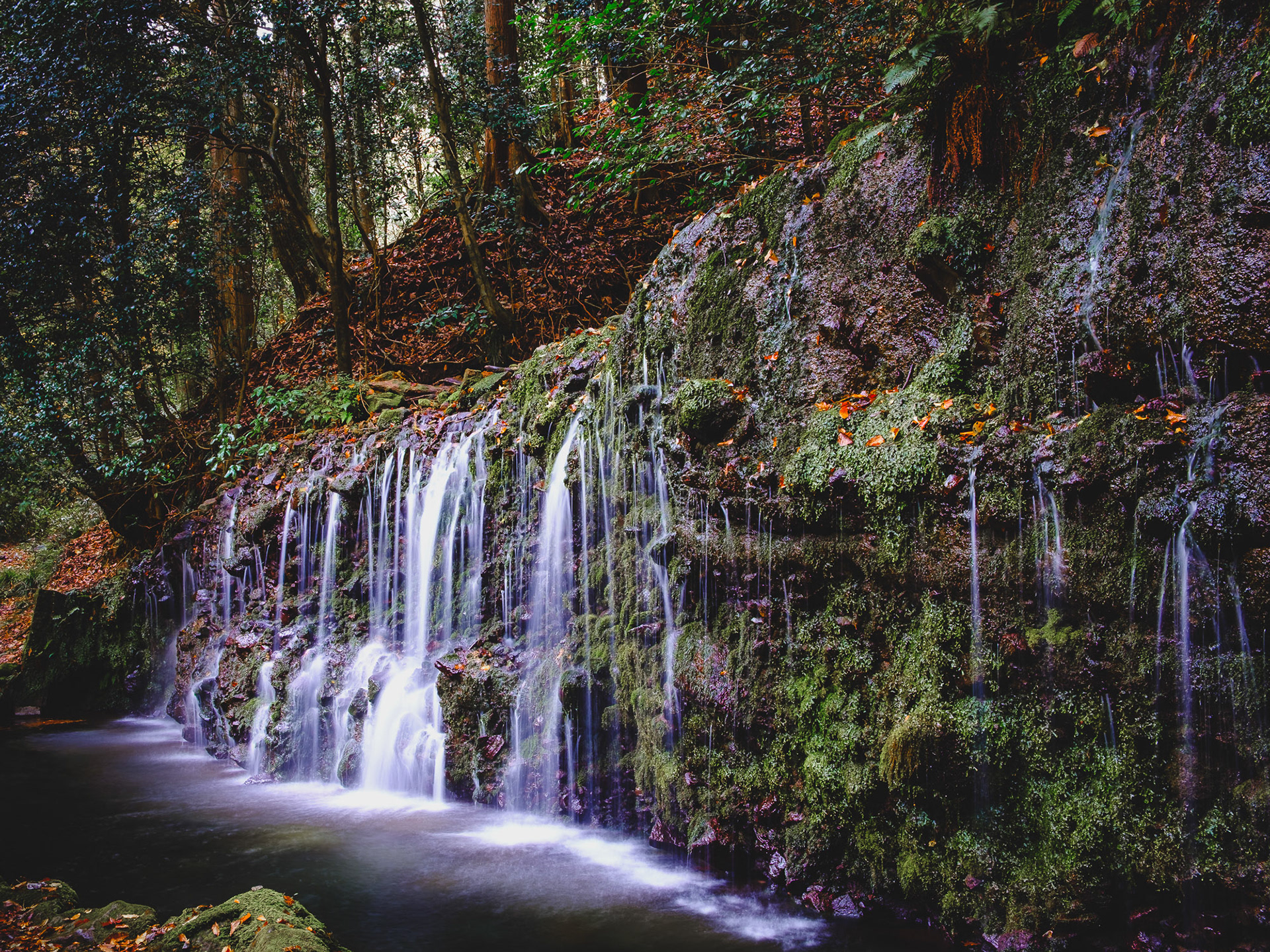
A small waterfall at Chisuji Falls in Hakone, surrounded by mossy rocks and green forest light.

Chisuji Falls—small, hidden, and quiet enough to feel unreal.
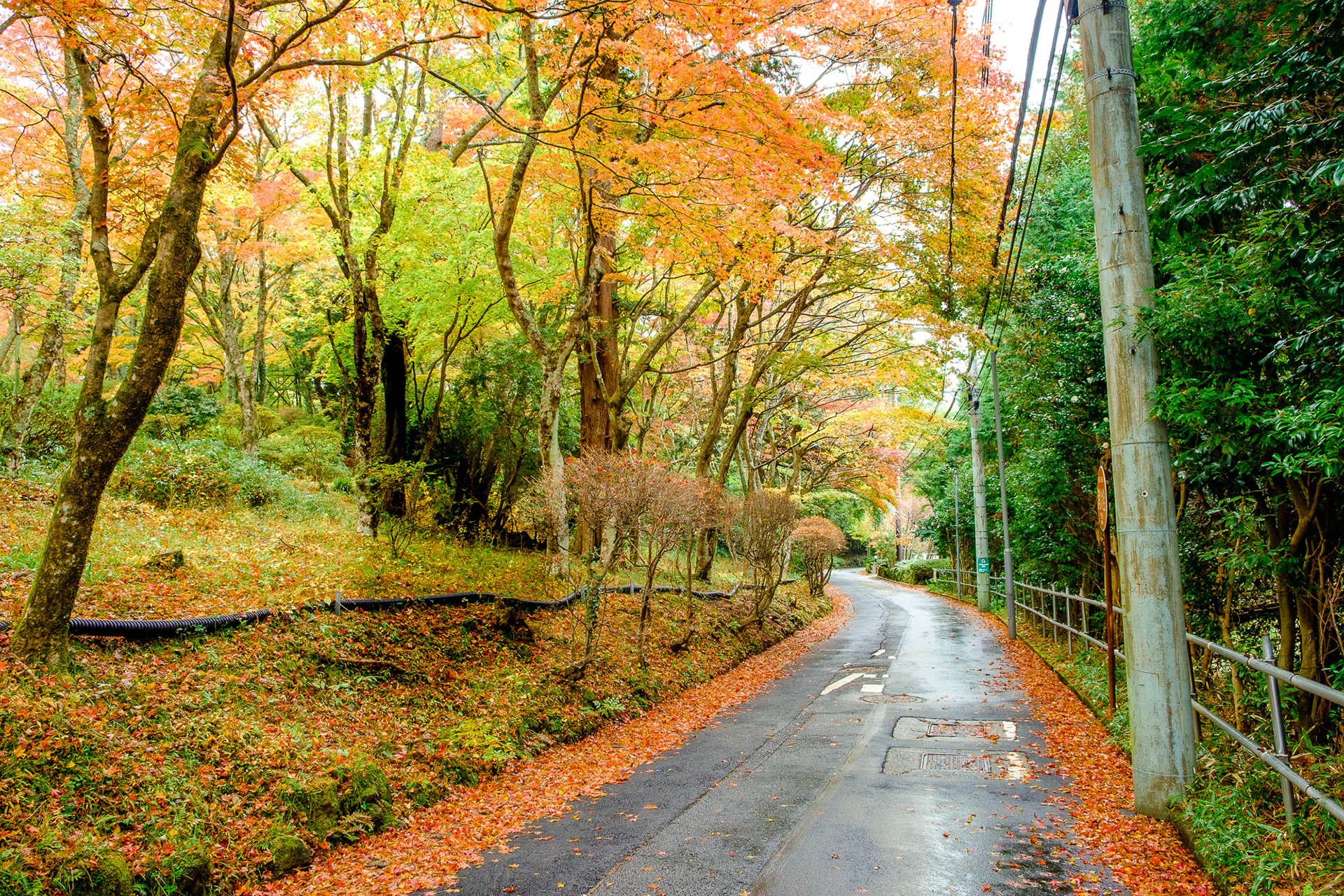
Vibrant autumn colors against wet stone near Chisuji Falls Hakone

On the way back up, I stopped several times—the autumn colors against damp stone felt impossible not to document.
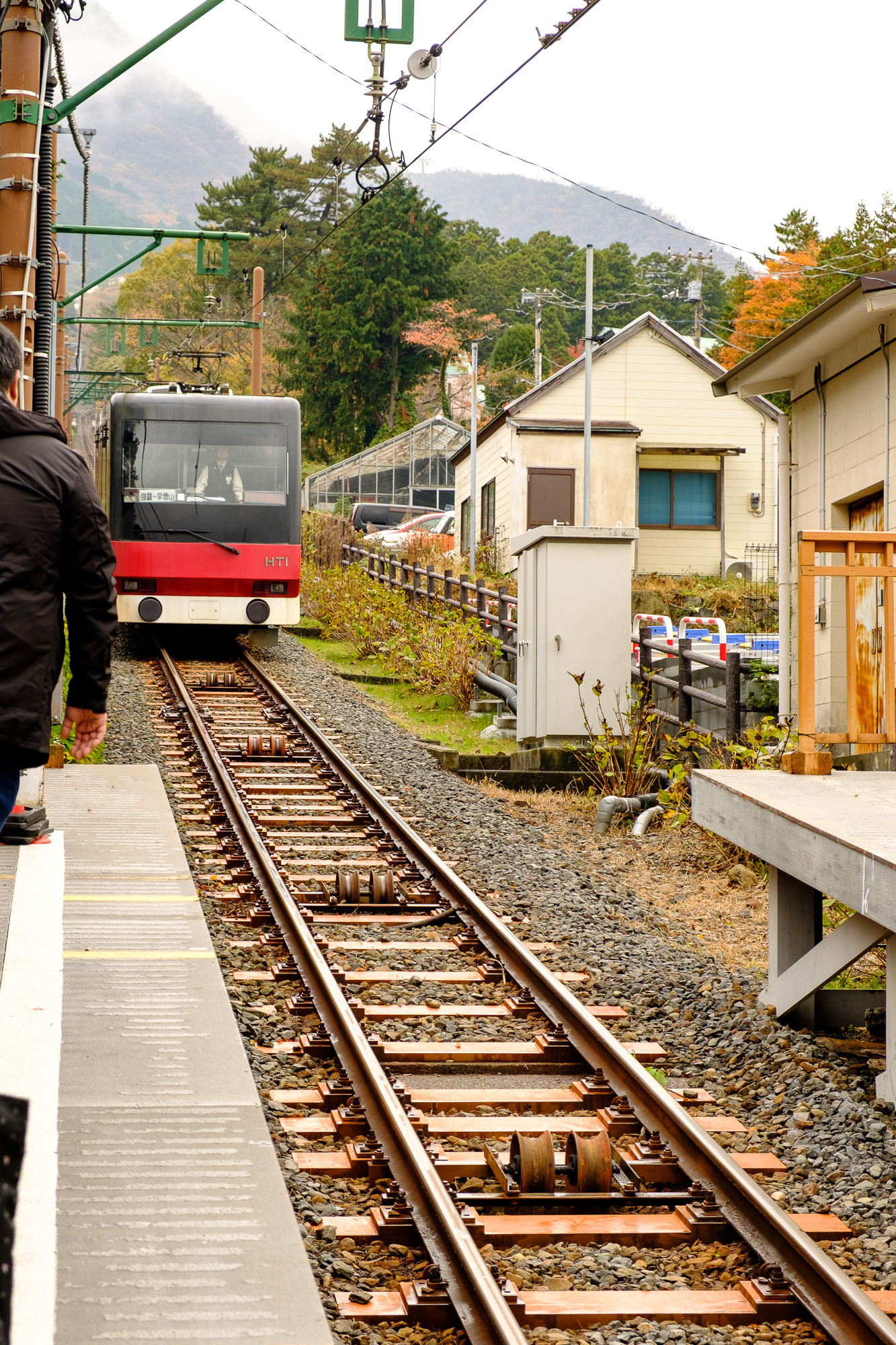
Owakudani
We walked back to the station and hopped on the train again. At Gora, we switched to the Hakone Tozan Cable Car, the funicular that climbs up to Sounzan. From there we took the Hakone Ropeway —the aerial tramway that floats over the steaming volcanic slope toward Owakudani.
Hakone Tozan Cable Car funicular climbing to Sounzan station

The cable car climbing to Sounzan—another mode of transport, another layer up the mountain.
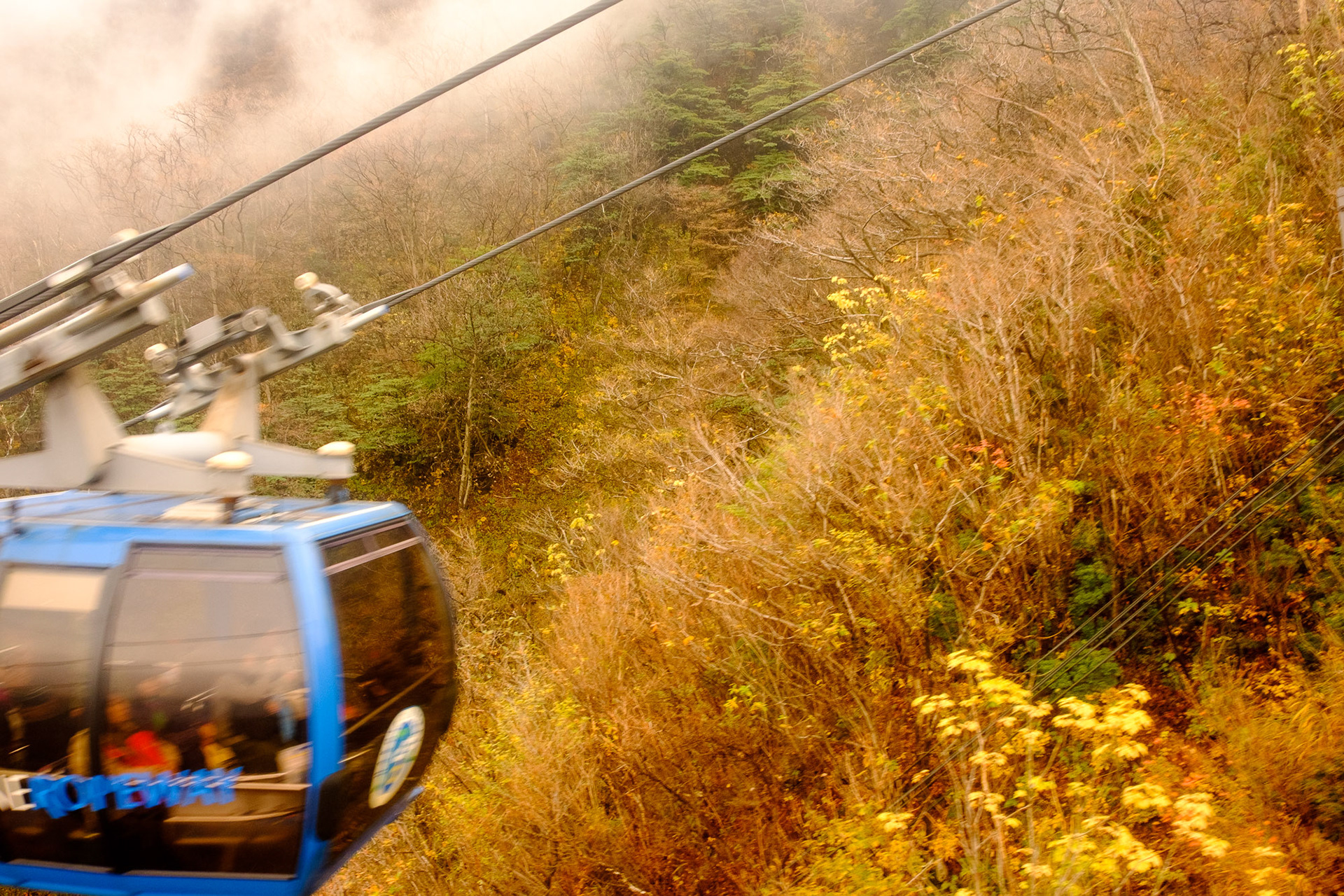
A Hakone Ropeway gondola moving over the autumn-colored mountainside on the way to Owakudani.

Floating toward Owakudani on the Hakone Ropeway, suspended above the volcanic slope.
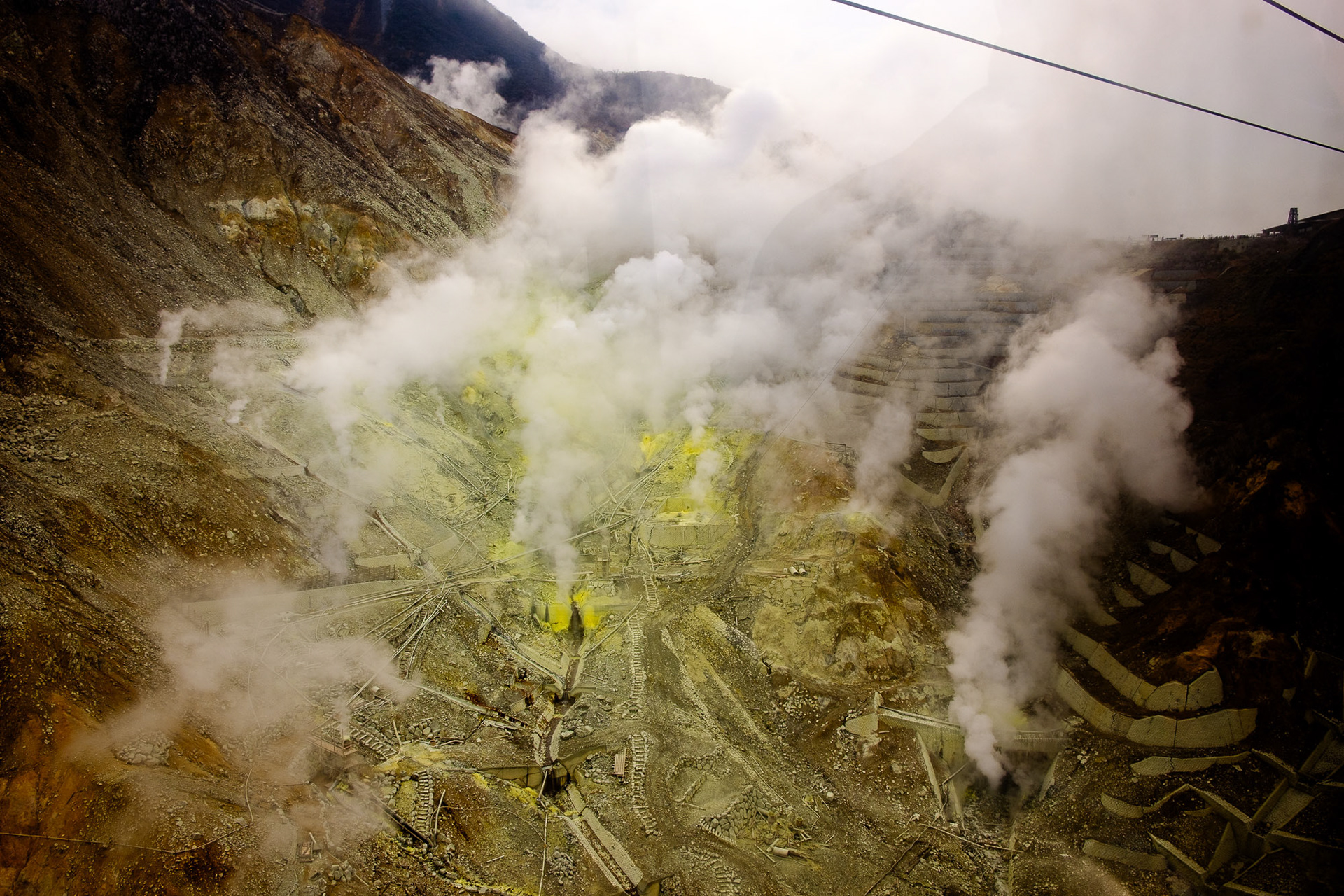
It's a strange feeling to hang in a small gondola above an active volcano. The ground beneath us was white and yellow with sulfur, steam rose from cracks in the mountain, and the air smelled like rotten eggs. It was both beautiful and a little unsettling.
Volcanic steam vents and yellow sulfur deposits at Owakudani seen from above, with dense plumes rising from the rocky landscape.

Steam rising from the sulfur vents of Owakudani—beautiful, harsh, and otherworldly.
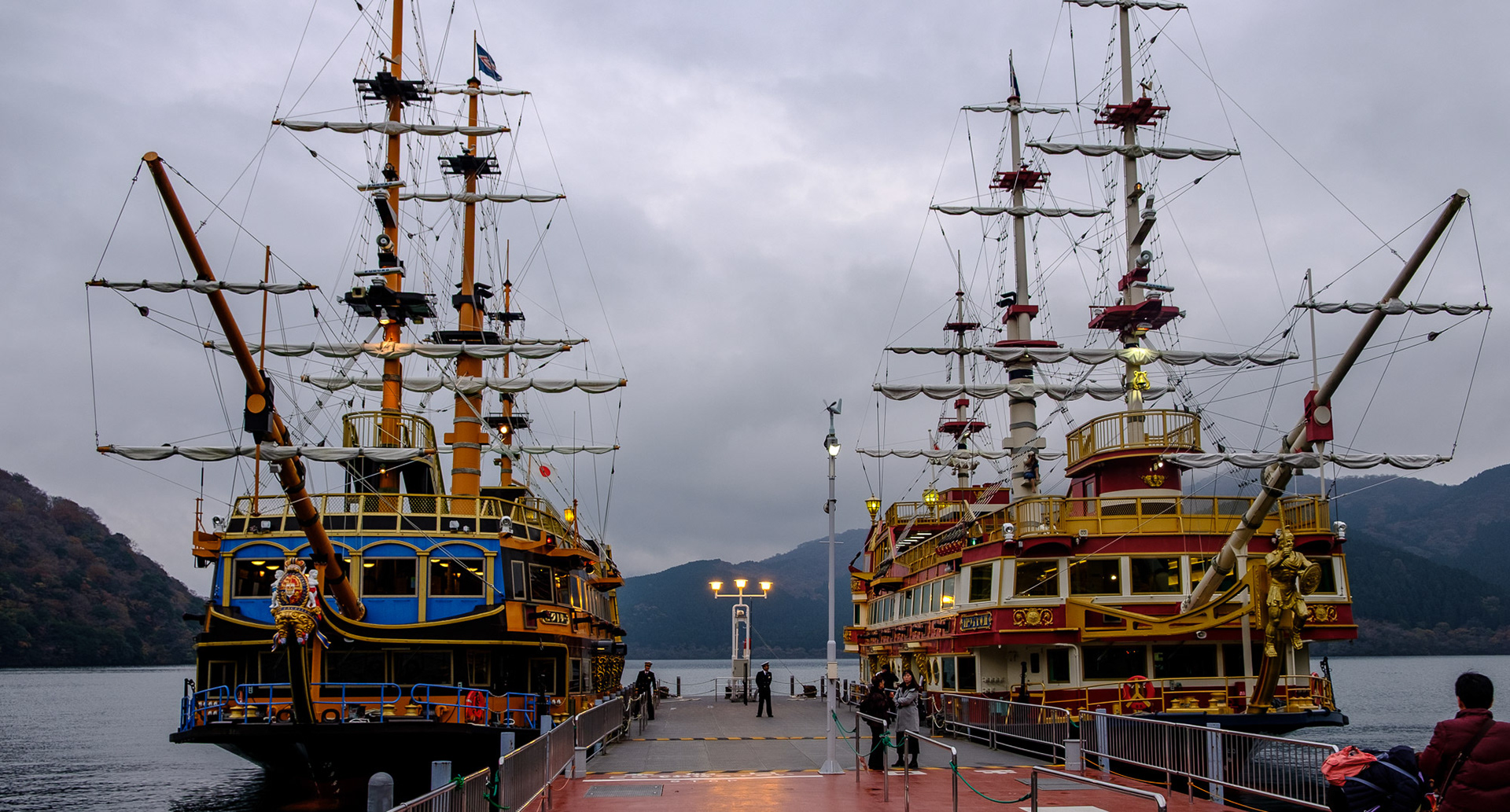
At Owakudani we stopped for lunch—katsu curry—and walked out among the sulfur fields. Here and there, steam billows up from the ground, and the whole area glows yellow. It felt like walking on another planet.From Owakudani we continued with the ropeway down the other side of the mountain to Togendai at the lake's northern end. There waited Hakone's perhaps most famous tourist attraction: the pirate ship.
The Pirate Ships on Lake Ashi
Traditional pirate ship tourist boat on Lake Ashi in Hakone

The pirate ship crossing Lake Ashi. Yes, it's exactly what it sounds like. Absurd and fantastic.
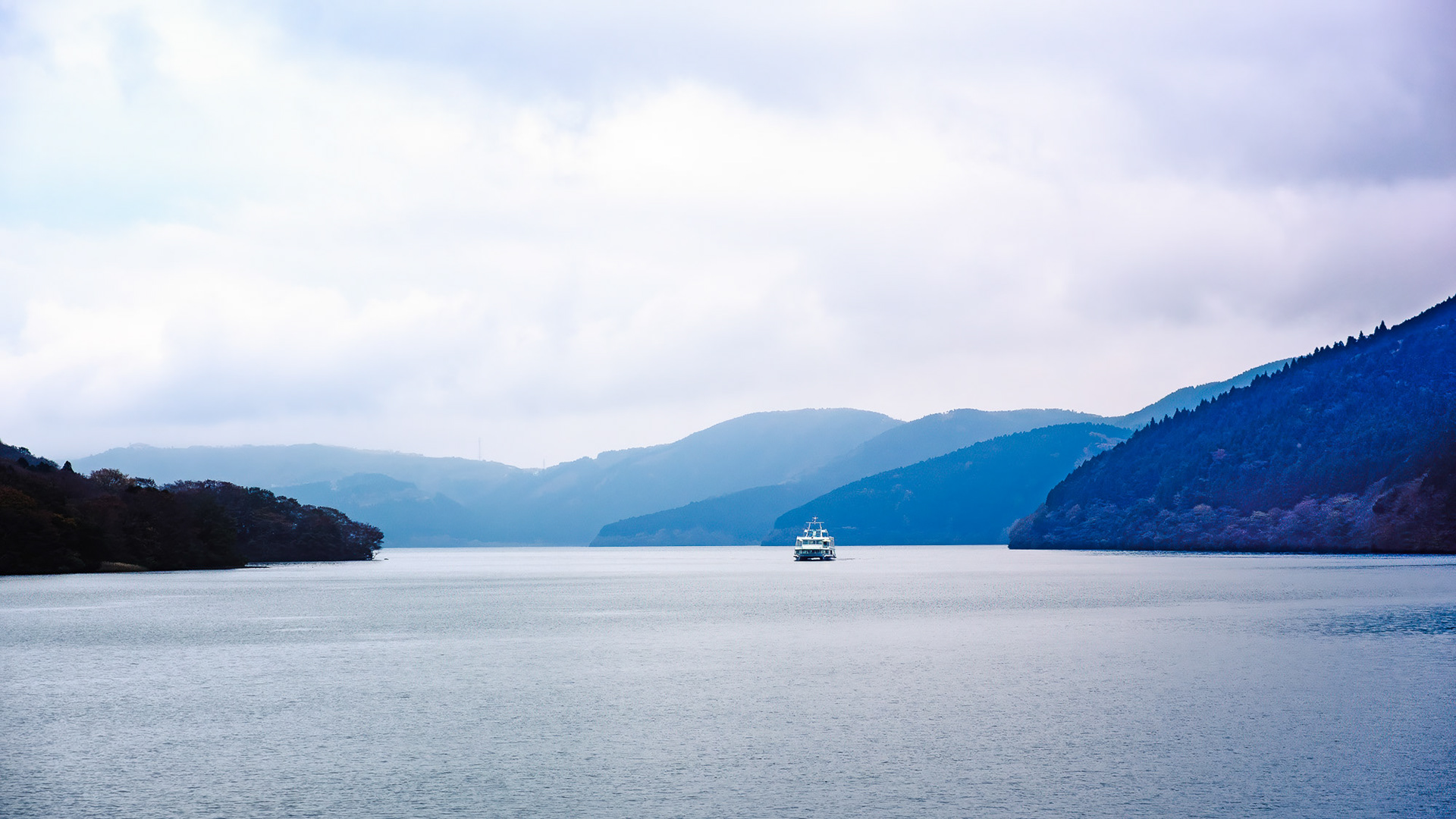
Yes, it's exactly what it sounds like. A ship designed like a 17th-century pirate ship that crosses Lake Ashi. It's absurd. And fantastic.
We boarded and found a spot up on deck. The crossing took about half an hour, and the views were expansive—mountains layered upon mountains that constantly changed shape on the horizon. Toward the end of the journey, we passed close to the torii gate we had visited the day before, and it looked different from the water—larger, more monumental.
Layered mountains view from pirate ship on Lake Ashi Hakone

Mountains layered upon mountains, constantly changing shape on the horizon.
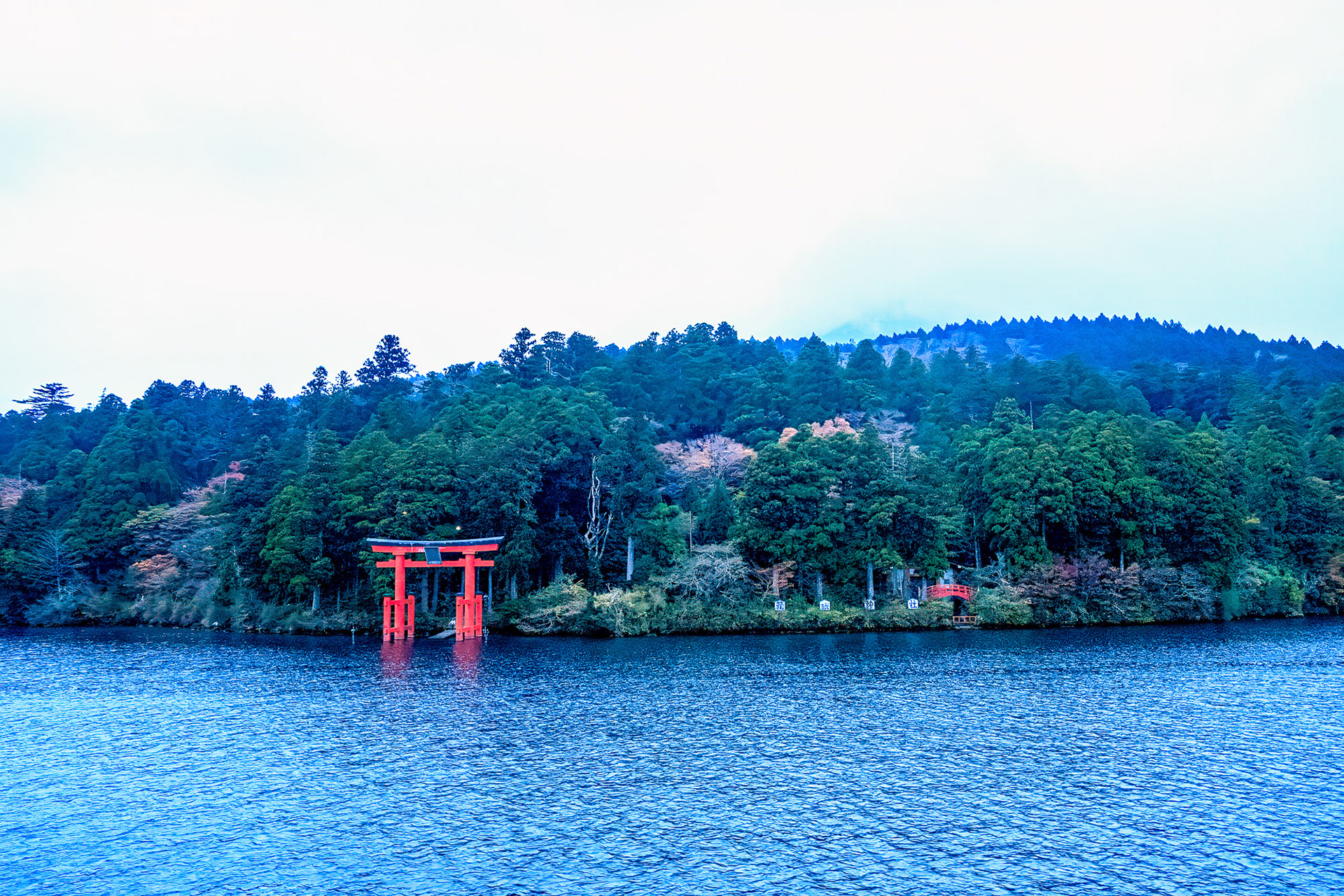
Hakone torii gate viewed from water aboard pirate ship Lake Ashi

The torii gate from the water—larger and more monumental than it appeared the day before.
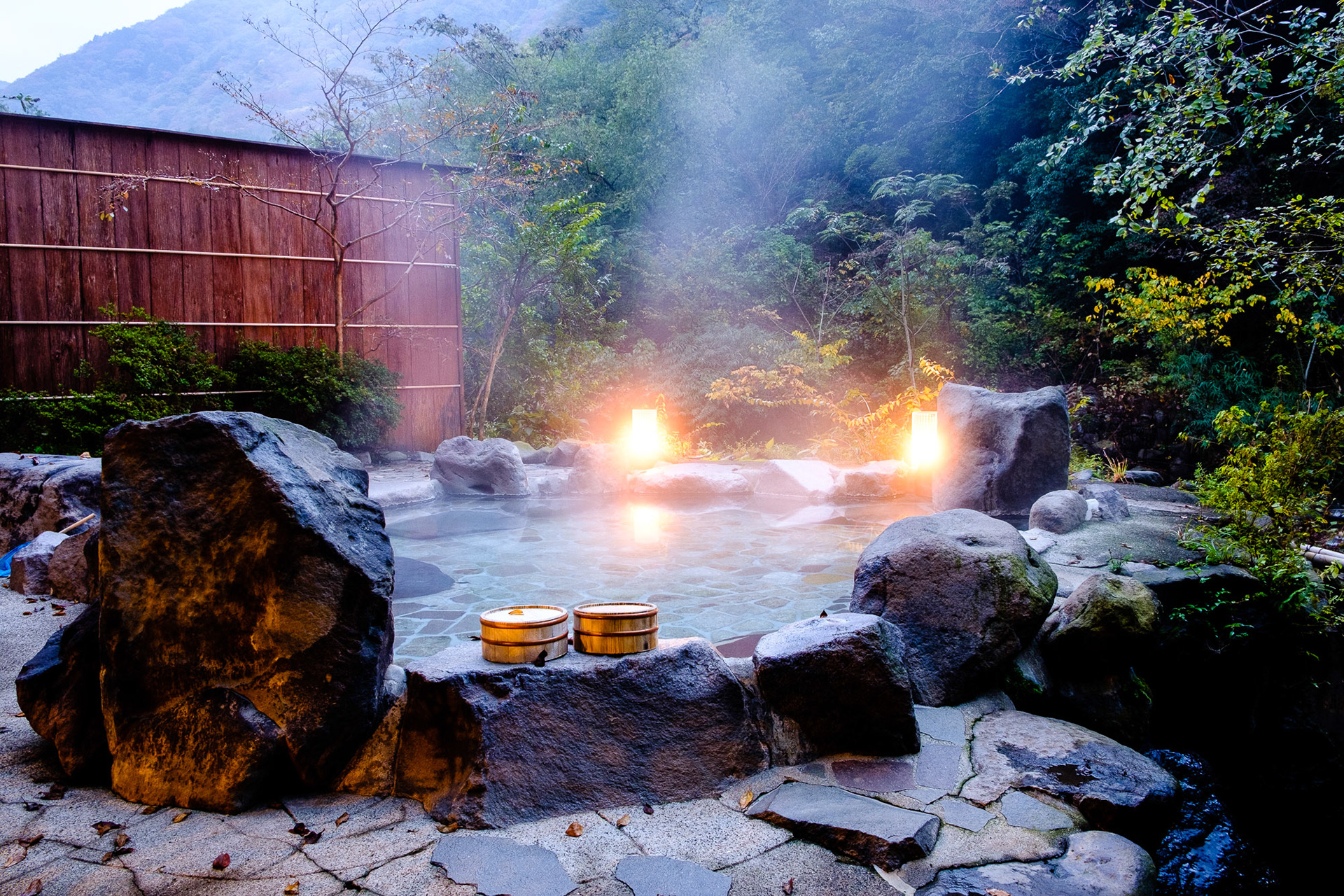
After a long day of buses, trains, cable cars, ropeways, walks, and pirate ships, we were both tired and elated. We took the bus back to the ryokan and went straight to the onsen. Sinking into the warm water after all those hours of movement felt like exactly the right way to end the day.
Outdoor onsen hot spring bath at Hakone ryokan with mountain view

Sinking into the outdoor onsen after hours of movement—exactly the right way to end the day.
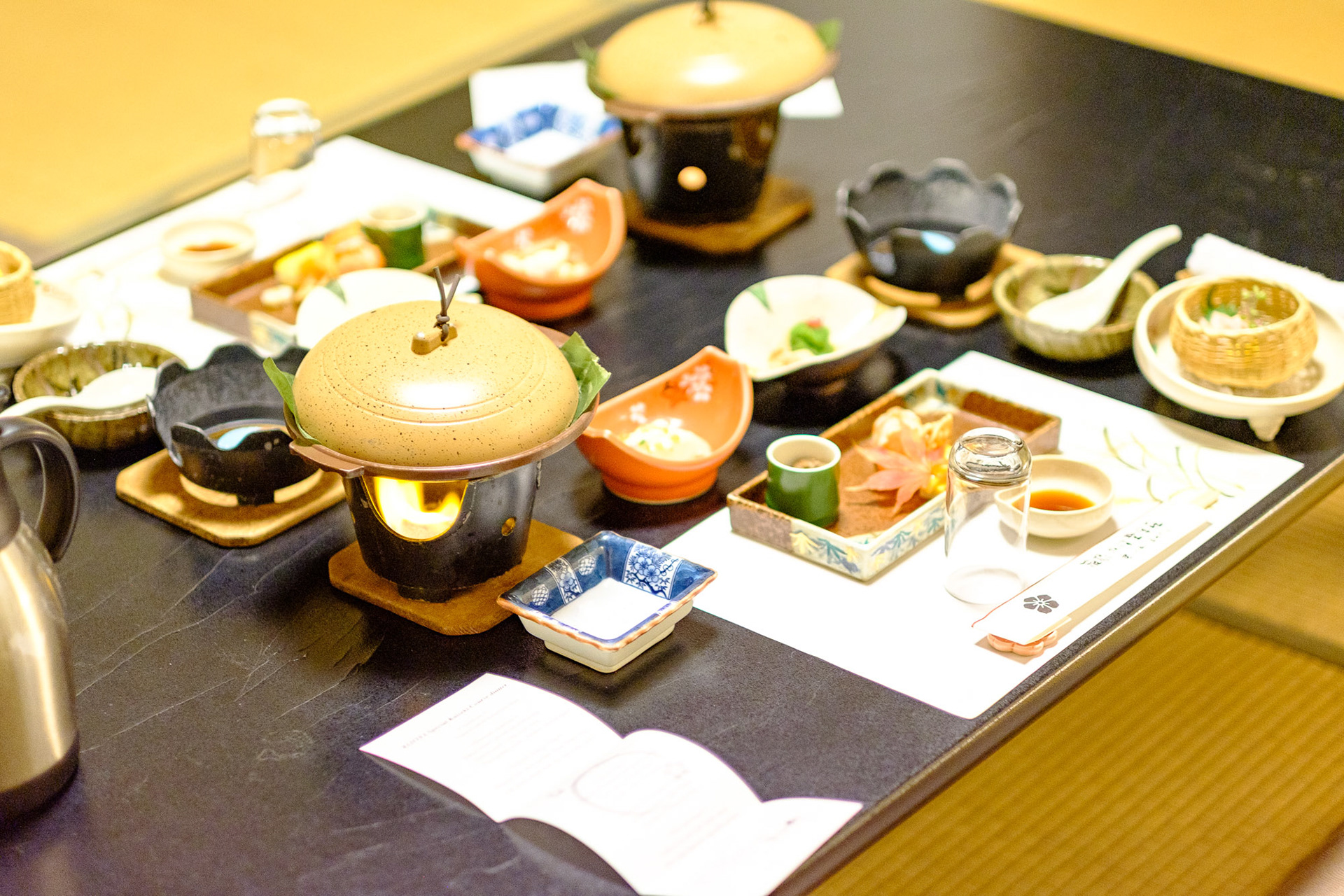
For dinner we had another kaiseki. Course after course our nakai brought in—grilled pheasant, scallop, steamed snapper—each plate arranged like small works of art.
Second kaiseki dinner with grilled pheasant at Hakone ryokan

The second kaiseki: grilled pheasant, scallop, steamed snapper—each plate a small work of art.
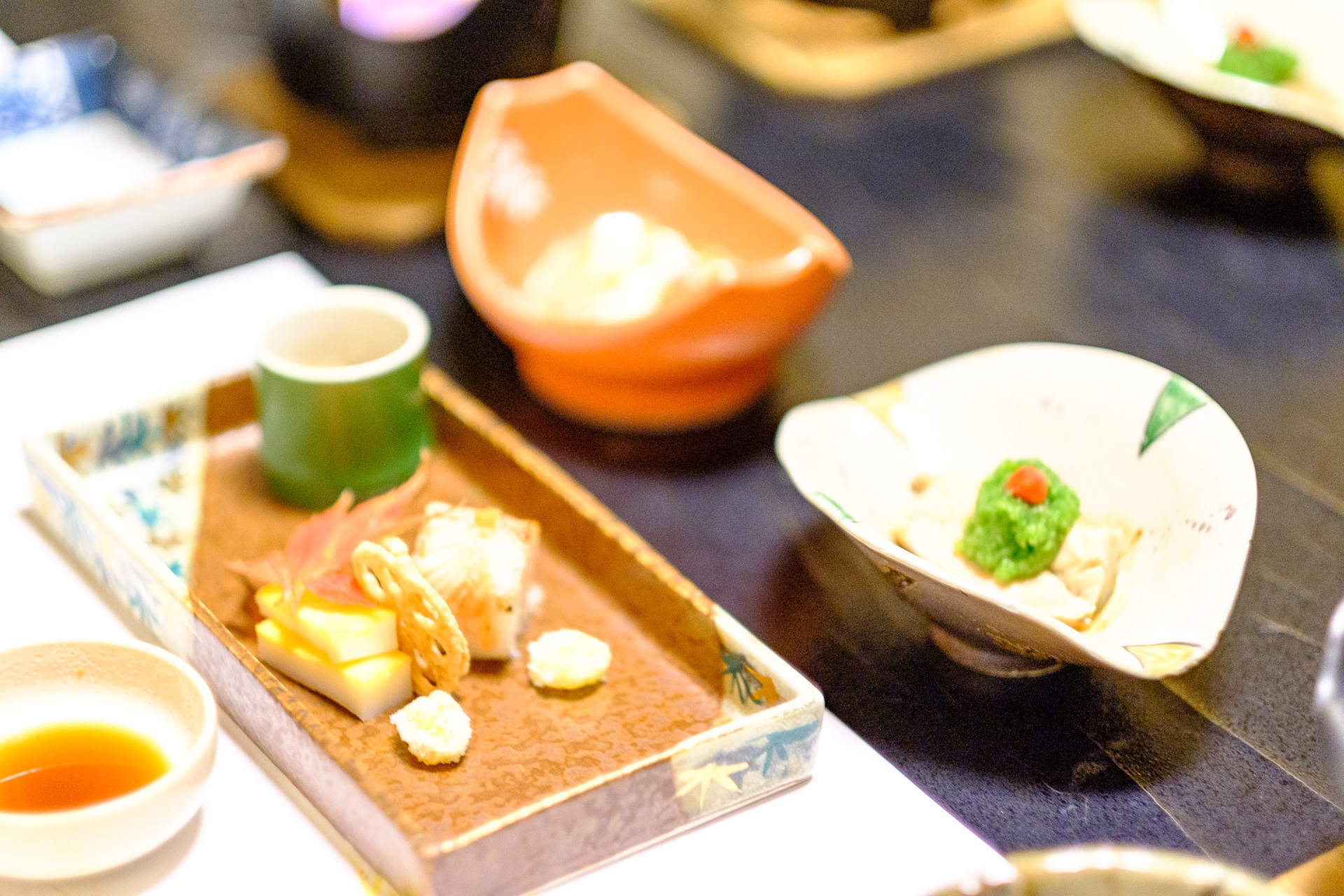
Beautifully plated scallop dish from kaiseki meal in Hakone

Details matter in kaiseki—every element placed with intention.

We ate slowly. Didn't talk much. Just let the day sink in. Tomorrow we would continue to Kyoto,  the adventure was far from over.

You may also like

Back to Top